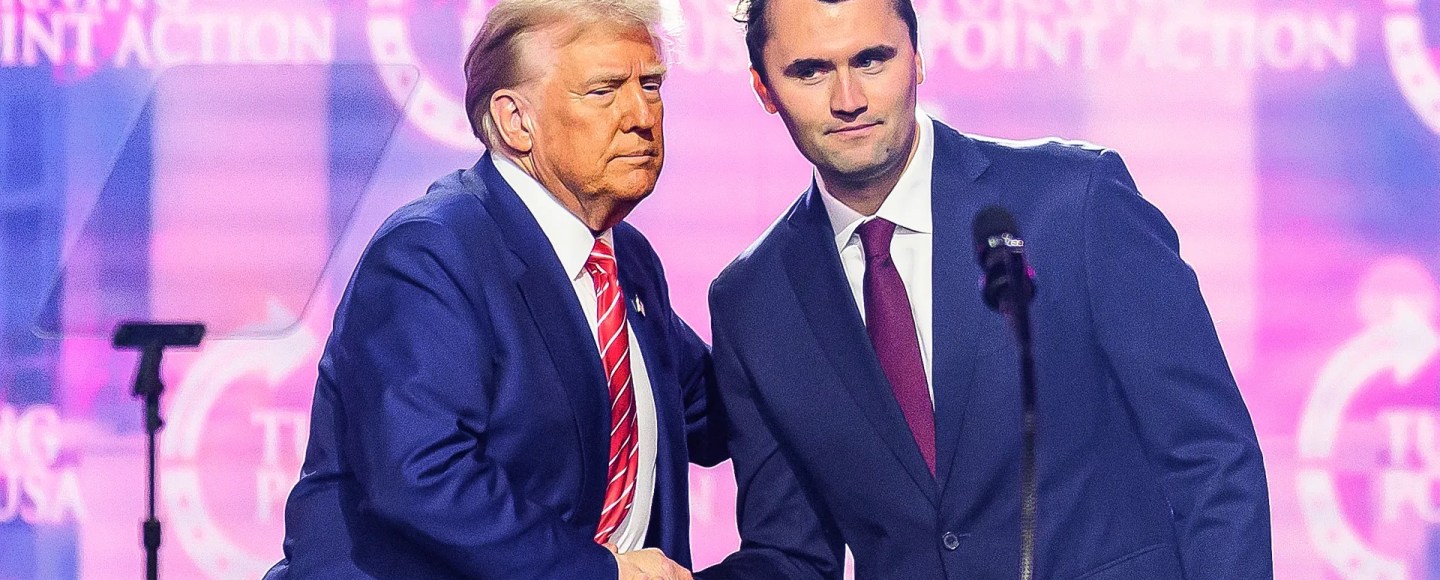

In the aftermath of Charlie Kirk’s death, I saw a longtime favorite pastor from Tennessee post on Instagram that Kirk died for speaking the Truth. He encouraged young adults not to be afraid to do the same, even if it cost them their lives. While I would have no problem if the pastor had simply used Kirk’s death to condemn violence, his message went further. He urged his followers to appreciate Kirk’s “methods,” regardless of their agreement with his message. This framing is not just misleading; it’s dangerous. Charlie Kirk was not a martyr for the Christian faith; he was a casualty of the divisive political extremism he championed.
The “methods” Kirk used were debates on college campuses and his podcast, The Charlie Kirk Show, where he made most of his controversial statements. But Kirk was not visiting these campuses to spread the Gospel to the “lost.” His mission was political: to promote the vote for the Republican Party.
Kirk primarily visited campuses in Red states and/or predominantly white institutions. He did not visit a single HBCU campus, which is why the majority of Black people had no idea who he was at the time of his death. Whenever he visited the University of Tennessee in Knoxville, he could have made a stop at Tennessee State University in Nashville.
Even with his racist comments against Black people and the Civil Rights Movement, his image could have potentially been salvaged if Black students had had the opportunity to challenge him in person.
To understand the discrepancy between the pastor’s portrayal and reality, it is crucial to examine the “Truths” Kirk actually espoused. Below are some of his most controversial statements:
Kirk is known to have said that the Civil Rights Movement was a mistake.
On his show, he commented on seeing a Black pilot by saying, “‘I hope he’s qualified,’” questioning whether the pilot was hired based on merit or affirmative action. Did Kirk not stop and think that his Black pilot was more than likely trained by white men?
He made generalizations about crime in urban areas, stating, “prowling Blacks go around for fun to go target white people, that’s a fact.”
He disparaged prominent civil rights leader Martin Luther King Jr., calling him “awful” and “not a good person.”
He compared abortion to the Holocaust.
He argued that a certain number of gun deaths are an acceptable price for the right to bear arms, saying, “It’s worth it to have a cost of, unfortunately, some gun deaths every single year, so that we can have the Second Amendment to protect our other God-given rights.”
Are these the Truths that my former Pastor believes Kirk stood for?
My former pastor brought up Kirk’s name again during his Sunday service, suggesting to his congregation that Kirk “could have been any of us.” He even added that Kirk “could have been him.”
I wholeheartedly disagree. I mean, could I get shot with an AR at any given moment? Of course. Can I be killed because I’m a political influencer? No, because I’m not a political influencer
because I’m not a political influencer. Kirk wasn’t killed for being a Christian spreading the Gospel; he was assassinated because his murderer viewed him as a far-right fascist.
This distinction between political and religious persecution becomes clearer when we consider other tragedies. For example, one could argue that the victims of the 2015 Charleston Church shooting, murdered by neo-Nazi Dylann Roof during a Bible study, died for being Christians. Yet, I haven’t heard a white pastor claim “that could be me.” This is because, while the victims were Christian, they were targeted specifically for being Black. Their race, not their religion, made them the target of that particular brand of hate.
Some might argue that the surge in church attendance following Kirk’s death makes him a martyr. I see this as a temporary reaction rooted in fear, not a genuine revival. It is only a matter of time before these newcomers, save for those who stick around for political reasons, fall back into their old routines. When they feel comfortable again.
I asked a few conservatives on Instagram if they believed it was accurate to call Charlie Kirk a Christian martyr. Abigail DeJarnatt from Counteract USA responded that while she would have shared my criticism years ago, she believes Charlie’s faith in Jesus recently became the focal point of everything he fought for.
I find that hard to believe.
This insistence on making Kirk a Christian martyr raises a difficult question. Why is there a desire to frame a political figure’s death in religious terms? Perhaps for some, there is a yearning to feel persecuted for their faith in a country where they hold significant cultural power. If my former pastor continues to simply preach the Gospel, I highly doubt he will ever die because of it.
By choosing to champion Kirk on social media, perhaps my former pastor is inviting controversy. Perhaps he wants to feel as though he, too, could lose his life for his beliefs in the United States—even in a Red state—so that his name might also become a monument to the ultimate sacrifice for Jesus.
More likely, this pastor will retire someday, the church will hire a new leader, and he will be remembered fondly, not as a martyr. He will not be made a martyr for Christianity unless he makes partisan politics an equal focal point of his ministry. There have already been comments on social media from people disappointed in his defense of Kirk. If he continues down this path, he may not lose his life, but he stands a far greater chance of losing his church.
Ultimately, conflating inflammatory political ideology with the Gospel of Jesus Christ does a disservice to both. It cheapens the sacrifice of true martyrs and poisons the well of faith with the bitterness of political division.


0 comments on “A Martyr for Politics, Not Religion.”