
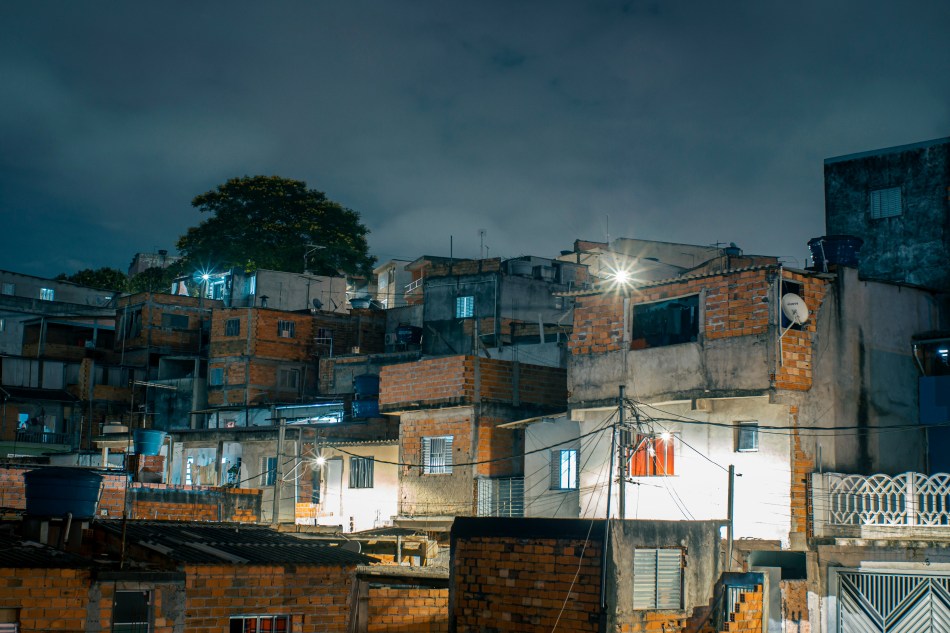
The sound of automatic gunfire shooting through the narrow alleys of a Rio de Janeiro favela recently was not the sound of a gang war. It was the sound of the state. In a massive operation against a drug gang, police killed 119 people. Let us call this what it is: a massacre carried out under the law.
It is easy for an American reader, scanning this headline over coffee, to feel a sense of detached horror. We see the images of heavily armed police, the grieving residents, the body bags, and we think that this is horrible, but not terribly surprising for a place like Brazil. Especially the slums of Brazil. It is a place we associate with problems of violence and corruption, problems far removed from our own.
But are they?
We tell ourselves that such a thing—a state-sponsored urban battle ending in a triple-digit body count—could not happen here except on a movie set in Hollywood. We have rule of law, we have oversight, we have a clear line between the military and domestic police. We have democracy.
That line, however, has begun to look less like a concrete barrier and more like a smudge in the dirt. The uncomfortable truth is that while the scale of the Rio raid is shocking, the tools and the mindset are becoming distressingly familiar.
For years, we have watched the “war on drugs” and the “war on terror” equip our local police departments with military-grade hardware. We have seen MRAPs, designed for IEDs in Baghdad, rolling down the streets of urban cities. It was all shocking at first–like gun violence in schools–but we will also become desensitized to lethal raids in our neighborhoods just as we’ve mostly become desensitized to school shootings.
We have now seen federal agents, dressed in camouflage without insignia, pulling protestors into unmarked vans in American cities. We have seen Immigration and Customs Enforcement (ICE) conduct raids in urban centers that look more like paramilitary operations than law enforcement. I suspect many of these agents are making up for their fear or failure of joining Special Forces or becoming a Seal.
We have seen the National Guard, rifles in hand, deployed not to repel an invasion but to manage our own citizens in our own state capitals.
The official justifications are always about “law and order,” about “securing federal property,” or about “combating violent crime.” These are the same justifications, the very same words, used by officials in Brazil. They, too, are fighting a “war” on drug traffickers.
When the state decides to wage “war” on a domestic problem, it stops seeing the people involved as citizens to be arrested and tried. It begins to see them as an enemy to be neutralized. The neighborhood becomes a Battlefield just like the video game. The people in it—the grandmothers, the children, the workers—become collateral damage.
We are not at the point of launching a full-scale assault on a neighborhood. Not yet. But the precedent is being set, brick by brick. The deployment of federal power in cities, often against the wishes of local officials, serves a specific purpose: it normalizes the sight of troops on our streets. It desensitizes us. It makes the “unthinkable” just a little more plausible.
The Rio massacre is the logical, horrific conclusion of this mindset. It is what happens when the state decides that the only solution to a social problem is overwhelming, indiscriminate force.
We cannot afford to look at the smoke rising from that favela and see it as a foreign spectacle. We must see it as a warning. The same tools are already in our government’s hands. The same “war” mentality is already in its vocabulary. All that separates us from them is a firewall of political will and public outrage—a firewall that is getting weaker every day. We must watch, and we must be loud, and we must ensure that this particular brand of “order” stays far from our shores.
 ArmstrongTimes
0 comments on “The Fatal Police Raid in Brazil is a Glimpse of What America is Becoming.”